










What is HbA1c?
HbA1c (hemoglobin A1c)
HbA1c is an abbreviation of hemoglobin A1c.
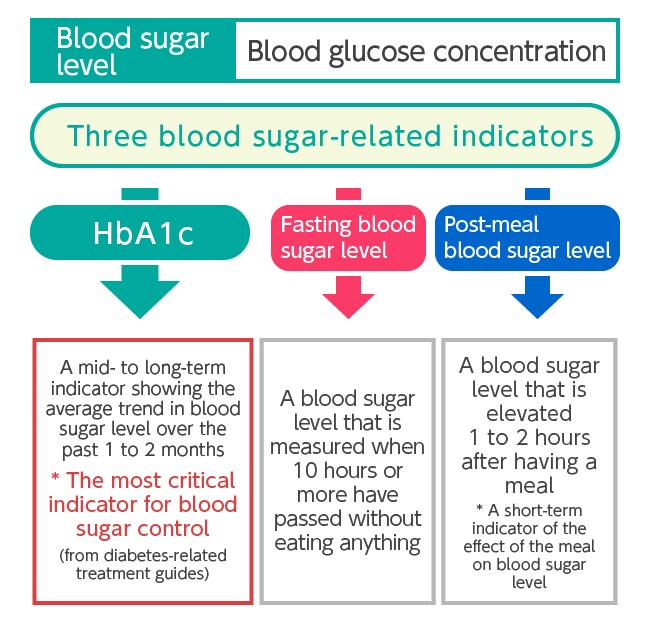
There are three different indicators (targets of measurement) for measuring blood sugar level: fasting (i.e., empty-stomach) blood sugar, postprandial (i.e., post-meal) blood sugar, and HbA1c levels.
Fasting blood sugar level refers to the blood sugar level that is measured when 10 hours or more have passed without eating anything. Postprandial blood sugar level refers to an elevated blood sugar level measured 1 to 2 hours after having a meal and is a short-term indicator of the effect of the meal on blood sugar level. In contrast, HbA1c level is a mid- to long-term indicator that shows the average trend in blood sugar level over the past 1 to 2 months. For this reason, HbA1c level is considered important as a comprehensive indicator of blood sugar status, and is referred to as “the most critical indicator for blood sugar control” in diabetes-related treatment guides.
Hemoglobin (Hb) – called kesshikiso in Japanese – is a component of red blood cells that transports oxygen throughout the body. Blood is red because that is the color of hemoglobin. HbA1c (hemoglobin A1c) is formed when hemoglobin (Hb) binds to glucose in the blood (i.e., blood sugar) and undergoes a change (glycation).
The higher a person’s blood sugar level is (hyperglycemia), the more actively the hemoglobin and blood sugar tend to bind together, and the longer a person remains hyperglycemic, the higher the HbA1c level becomes. As such, testing the amount (concentration) of HbA1c in a person’s blood can reveal the average blood sugar level during a certain period in the past.
Where can HbA1c level be tested?
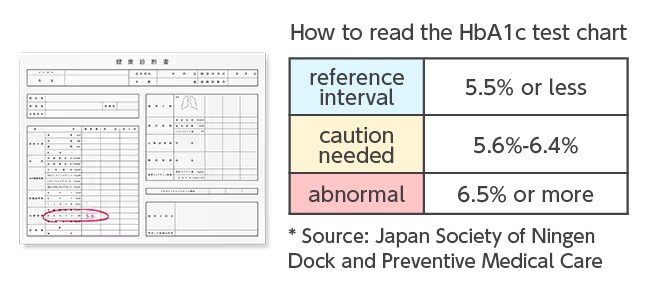
When you take a general medical screening or comprehensive medical examination, the diagnosis report usually includes HbA1c as one of the results. If the HbA1c level exceeds 5.6%, you are considered “caution needed,” and necessary measures must be taken.
What happens if my HbA1c level is too high?
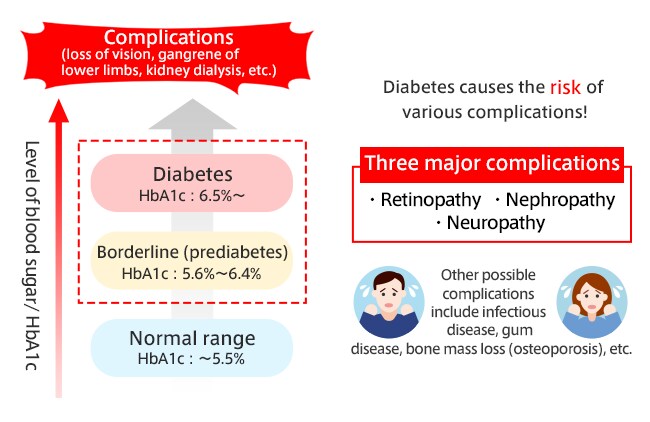
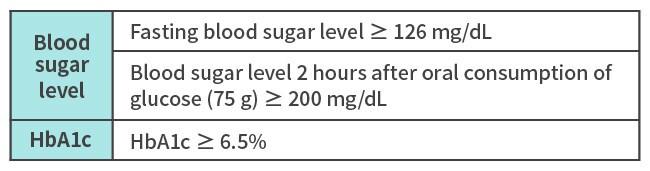
If you have a high level of HbA1c, it means you have a high risk of diabetes. The criteria for the diagnosis of diabetes are specified based on the level of blood sugar that is chronically high enough to cause microvascular disorders mainly in the form of retinopathy, which is a microvascular complication in the retina of the eyes. Such blood sugar levels are shown in the chart below.
When one has a high level of blood sugar but not high enough to be diagnosed with diabetes, it could still cause various health issues. Many of these health disorders do not occur just because one’s blood sugar level becomes too high at a given time. Rather, they manifest because the blood sugar level – i.e., HbA1c – remains high for a prolonged period, which causes negative physical impacts incrementally and appear as more obvious symptoms in subsequent years.